

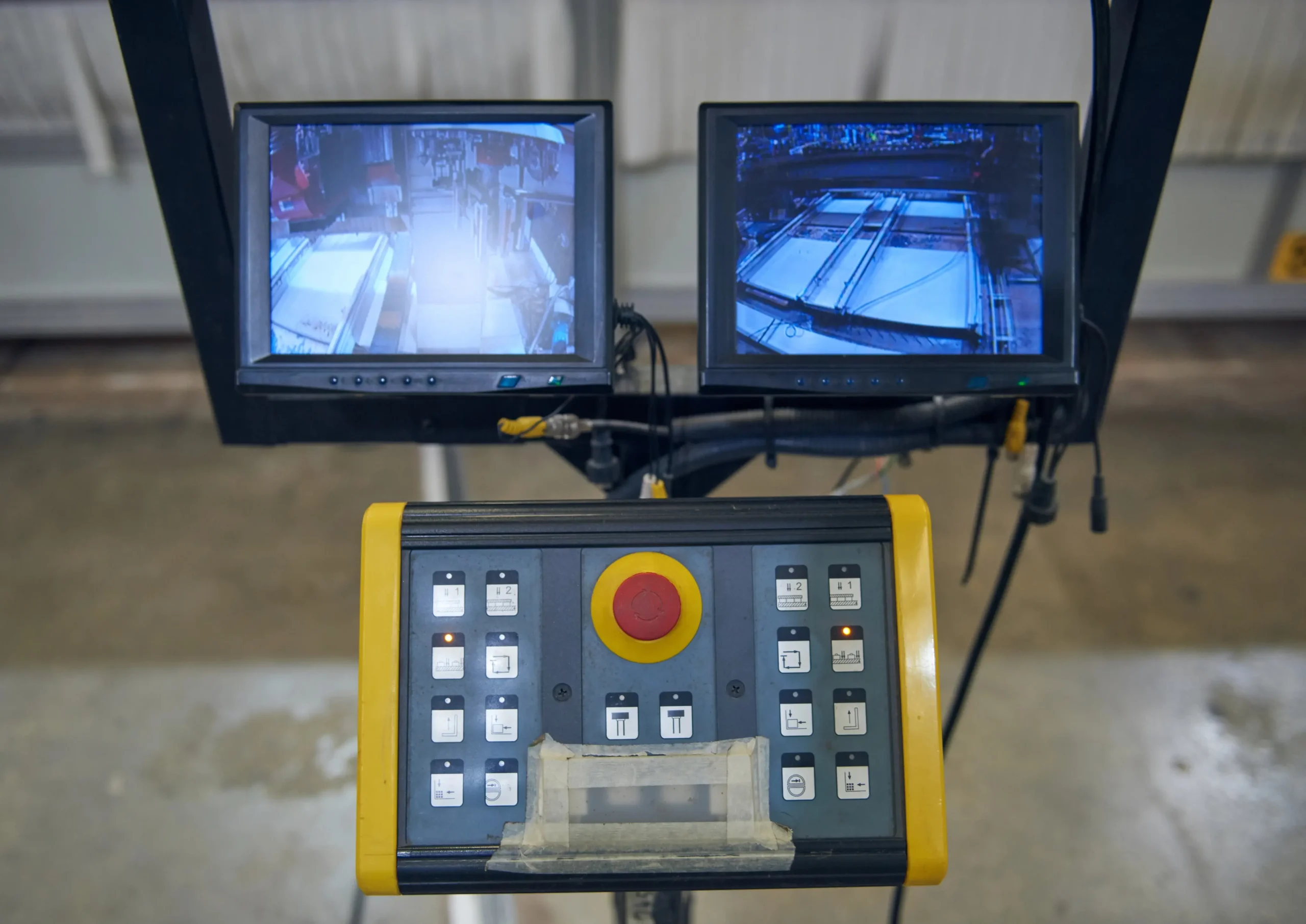
In rugged and safety-critical equipment, displays are often expected to operate for extended service lives in harsh environments, sometimes with limited access to trained service personnel. At the same time, OEMs face pressure to minimize downtime, reduce total cost of ownership, and support field replacement when failures occur. These goals can conflict, as design choices that improve service access may weaken sealing, mechanical stability, or optical integrity. Conversely, designs optimized solely for robustness may require depot-level repair or full system replacement.
A serviceable LCD design balances these competing priorities early in development rather than treating service access as a late-stage accommodation. Decisions around bonding, sealing, connectors, mounting, and access paths directly influence service time, long-term reliability, and qualification scope. This article examines how engineers can approach display serviceability in a way that supports field replacement while preserving the environmental protection and durability required in demanding applications.
Focus LCDs supplies display modules and subassemblies that integrate into larger OEM systems. System-level service procedures, regulatory compliance, qualification, and validation decisions remain the responsibility of the OEM.
Technical Background: What Serviceability Means for LCD Modules
Levels of Serviceability
Serviceability is not a binary condition. Display systems typically fall into several categories, including field-replaceable modules swapped on-site, subassembly service where elements such as the backlight or controller are replaced, depot-only service performed under controlled conditions, or non-serviceable designs where the display is replaced together with the system. Each approach carries implications for sealing, bonding, and mechanical architecture. Problems arise when service expectations do not align with how the display module is constructed.
Why Displays Are Sensitive to Rework
LCD modules are layered assemblies that rely on controlled interfaces, including optical stacks and polarizers, adhesives and bonding layers, fine-pitch connectors and flex circuits, and thin glass substrates. Repeated disassembly or handling of LCDs without controlled procedures increases the risk of contamination, misalignment, and latent damage. As a result, frequent access and servicing of the end device should take extra caution when considering a display assembly.
Environmental and Regulatory Context
In medical, industrial, transportation, and defense equipment, displays may form part of the system’s environmental boundary. During service, opening that boundary can affect ingress protection, electromagnetic behavior, and compliance status, particularly when resealing methods vary or lack documentation. Serviceability decisions made at the system level can therefore influence overall reliability and regulatory risk.
Key Design Considerations in Serviceable LCD Design
While serviceability outcomes depend on system-level architecture and service procedures, display module design choices can enable or constrain those outcomes.
1. Sealing Strategy and Reseal Risk
Displays in rugged equipment often contribute directly to the system’s ingress protection rating. Introducing service access creates resealing risk through pinched gaskets, inconsistent compression, or contamination introduced during service. Repeated opening of sealed interfaces increases the likelihood of moisture ingress or long-term seal degradation.
Serviceable LCD designs often encapsulate sealing at the module level rather than relying on field resealing procedures. Designing displays as sealed subassemblies and limiting field access to non-sealed interfaces can reduce variability and risk.
2. Mechanical Mounting and Alignment Tolerance
Serviceable designs must tolerate removal and reinstallation without degrading performance. Key considerations include controlled mounting torque, alignment features that prevent skew or stress, and isolation from enclosure distortion. Displays that rely on tight tolerances or adhesive positioning are more vulnerable to handling-induced failures.
Robust mechanical referencing improves repeatability during field replacement and reduces stress on glass and solder joints.
3. Electrical Interfaces and Connector Durability
Field service often requires disconnecting and reconnecting display interfaces. Risks include bent pins, damaged flex tails, incomplete insertion, and electrostatic discharge events. Interfaces designed for one-time assembly may not tolerate repeated cycles.
Serviceable LCD designs benefit from locking connectors with clear tactile feedback, strain relief to protect flex circuits, and grounding strategies that support controlled signal sequencing.
Reliability, Qualification, and Compliance Considerations
Serviceability Changes the Qualification Envelope
An application that is serviceable in the field must be qualified not only for initial assembly but also for post-service conditions. OEM qualification plans typically consider performance after removal and reinstallation of components, seal integrity following resealing, and electrical reliability after connector cycling.
Regulated and Market-Specific Implications
In regulated markets, display changes can trigger revalidation. Medical devices may require documentation updates after certain repairs, transportation systems often impose service traceability requirements, and defense programs may restrict or prohibit field-level rework. Designing sealed, replaceable display modules can help OEMs reduce variability introduced during service, which may simplify compliance management.
Focus LCDs does not provide regulatory certification, approval, or compliance sign-off. Regulatory compliance and revalidation decisions are managed by OEMs at the system level.
Manufacturing Consistency and Service Outcomes
Field service assumes replacement units fall within defined optical and electrical tolerances relative to the original units. Achieving this consistency requires controlled optical and electrical specifications, documented configuration management, and long-term component availability supported by ISO 9001–based manufacturing processes.
Practical Engineering Insights
Effective LCD integration into serviceable systems begins with OEMs explicitly defining what is field-replaceable, what requires depot repair, and what is non-serviceable. Ambiguity in service expectations often leads to inconsistent outcomes.
Favoring module-level replacement over internal rework improves repeatability and reduces contamination risk. Mechanical features that enforce correct assembly—such as asymmetric mounts, fixed compression stops, and tool-limited fasteners—support reliable replacement. Minimizing operating stress, particularly on backlights and optical stacks, can reduce service frequency and lifecycle cost.
Collaboration across mechanical, electrical, optical, and manufacturing disciplines is essential. Focus LCDs works with OEM engineering teams to support service strategies through display module design choices that balance costs, replaceability, and durability.
To discuss a specific application or display module design approach, contact Focus LCDs at https://focuslcds.com/contact.
Conclusion: Serviceability and Reliability Are Linked, Not Opposed
Designing for field service does not inherently require sacrificing display reliability, but it does require deliberate system-level decisions. Every access point, fastener, and interface affects environmental protection, optical stability, and long-term performance.
By defining service boundaries early, favoring sealed enclosure replacement, validating post-service conditions, and maintaining manufacturing consistency, OEMs can reduce downtime without introducing hidden reliability risks. In rugged and safety-critical applications, early collaboration with an experienced LCD engineering partner can help align serviceability goals with long-term display performance requirements.

