

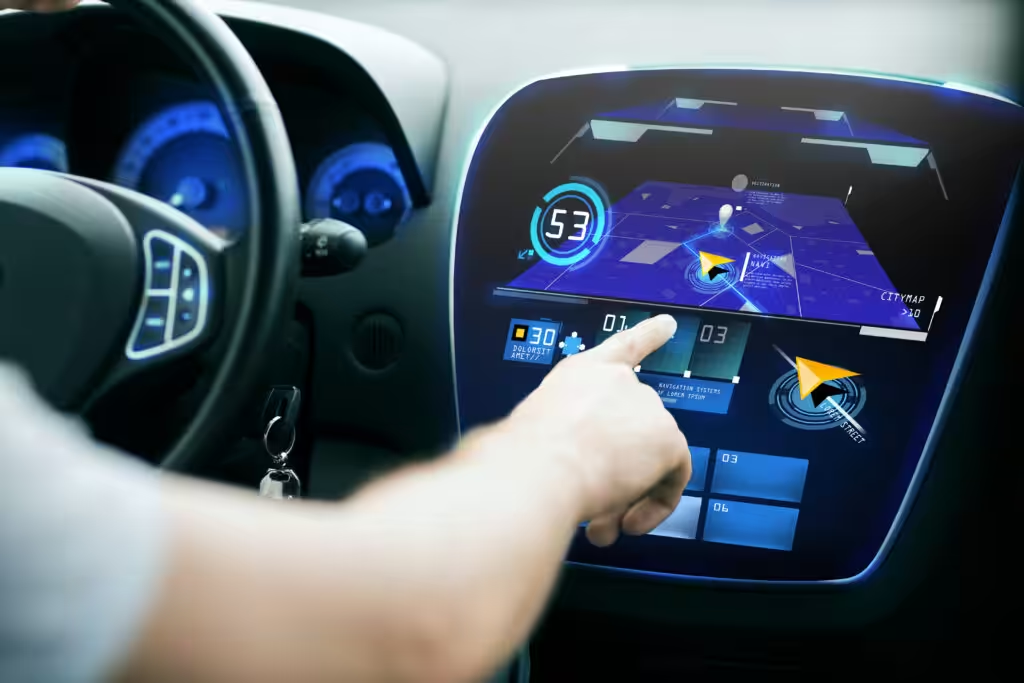
Automotive programs place tough demands on every display. Heat builds inside sealed cabins, winter startups happen in subzero temperatures, and vibration never really stops. Reliability starts in the design phase, and the fastest path to a dependable result is a clear plan, the right technology choices, and tight collaboration between your team and an LCD manufacturer that lives this work every day.
At Focus LCDs, projects move from concept to production with U.S.-based engineering support, ISO 9001:2015 processes, and display options built for demanding environments. The playbook below outlines how we help automotive teams meet reliability standards without slowing timelines.
Understand the Standards and the Use Case
Automotive teams typically validate displays against ISO 16750, IEC 60068 test methods, and OEM-specific requirements. These define survival in heat and cold, mechanical shock, vibration, humidity, and electrical stress. The standard alone rarely tells the whole story. The real operating profile matters just as much: cabin versus exterior exposure, continuous versus intermittent use, duty cycle, and required lifetime.
We begin by clarifying those details. A short call and a drawing or sketch give enough context to recommend the right display family, interface, and optical approach. Early alignment trims risk, cost, and time.
Select Display Technologies That Match Environment and Power
Automotive design rarely has a single right answer. Multiple technologies can succeed when matched to the job:
- TFT LCD supports rich color, graphics, and touch. IPS panels retain contrast at wider angles. Sunlight-readable options with 700–1700 nits improve visibility in glare.
- Transflective TFT provides strong readability in changing ambient light while helping control power draw.
- Reflective TFT works well where power budgets are tight and daylight is abundant.
- Monochrome Graphic or Character LCD offers efficient, reliable output for concise UIs, status, and diagnostics.
- Segment LCD delivers ultra-low power with custom icons and numerals for glanceable information.
- UWVD provides a true-black background with sharp contrast and wide viewing angles for premium, low-power interfaces.
- OLED can support compact layouts with fast response and wide operating temperatures down to –40°C.
Power source, duty cycle, and viewing distance influence the choice. We help teams compare options against brightness targets, size limits, and interface constraints, then finalize a path that balances readability, lifetime, and battery impact.
Design for Temperature, Vibration, and Optical Clarity
Reliability grows from a series of practical decisions:
- Temperature Range: Wide-temperature options exist across TFT, monochrome, UWVD, and OLED families. Cold start behavior, storage limits, and sunlight exposure guide polarizer and liquid-crystal mode choices. TFT options with operating ranges as wide as –30°C to +85°C support harsh environments.
- Backlight and Optics: High-brightness backlights, antiglare finishes, and optical bonding strategies maintain readability in bright conditions while controlling reflections. Transflective or reflective modes reduce dependence on the backlight.
- Mechanicals: Bezel fit, gasket design, and mounting features reduce stress on the module. Cable routing, connector selection, and strain relief support long-term durability under vibration.
- EMI and Grounding: Interface selection, cable length, and shielding influence noise immunity. We recommend layouts and accessories that support stable signaling.
Early discussion of enclosure sealing, venting, and UV exposure helps prevent fogging, delamination, or tint shift over time.
Prototype With Intent
Automotive projects benefit from fast prototypes that reflect production intent. Focus LCDs provides clear quotes with Non-Recurring Engineering (NRE) and tooling up front. Samples follow with the electrical interface, backlight, and optics needed for meaningful evaluation.
Teams often run optical checks, readability trials in bright light, and temperature cycling on the first round. We adjust items like FPC layouts, pinouts, or cover glass before locking the drawing. That measured loop avoids costly resets later.
Validate Through Environmental and Electrical Testing
Reliability claims gain weight through data. Programs commonly run:
- Thermal Cycling and Thermal Shock: Confirms function and cosmetic stability across cold starts and heat soak.
- High-Temperature Storage and Low-Temperature Operation: Verifies risks such as dark spot growth, contrast shift, or timing drift.
- Vibration and Mechanical Shock: Checks connector integrity, backlight survivability, and mechanical support.
- Humidity Exposure: Screens for corrosion and optical artifacts.
- Electrical Stresses: Startup timing, brownout behavior, ESD tolerance, and EMC performance.
We align test plans with the display technology and application, then document results in a format that supports your internal qualification flow.
Build Quality into Every Stage
ISO 9001:2015 certification anchors our quality system across engineering, design, and delivery. Drawings, revision control, and traceable materials keep programs organized from RFQ through shipment. That discipline supports industries with strict documentation needs and long service life requirements.
For standard modules, many sizes are stocked for quick sampling. For custom modules, we maintain clear records of specifications, approvals, and changes. Communication stays timely and direct, so decisions never stall.
Leverage U.S.-Based Engineering Support
Speed matters on automotive schedules. Direct access to a U.S. engineering team shortens feedback loops, clarifies tradeoffs, and moves prototypes faster. Customers reach real engineers who understand interfaces, timing, and environmental constraints. The result is a smoother path to qualification and production launch.
Plan for Lifecycle and Service
Design choices affect lifecycle support. We help teams plan for stable availability, stocking strategies, and service spares. If a legacy display must be replaced, reverse engineering and replication options reduce the impact on enclosures and firmware. When a platform expands to new trims or regions, the same mechanical footprint can often support multiple optical or brightness variants.
Ready to Start Your Automotive Display?
Bring a sketch, CAD model, or a short list of requirements. Focus LCDs will help you select a standard module or build a custom assembly with touch, cover glass, PCBs, and cables. From first samples to production delivery, you’ll work with an experienced, responsive team that keeps your program moving. Contact us today to get started!

