

LED Backlight Derating Curves for Long-Term LCD Reliability
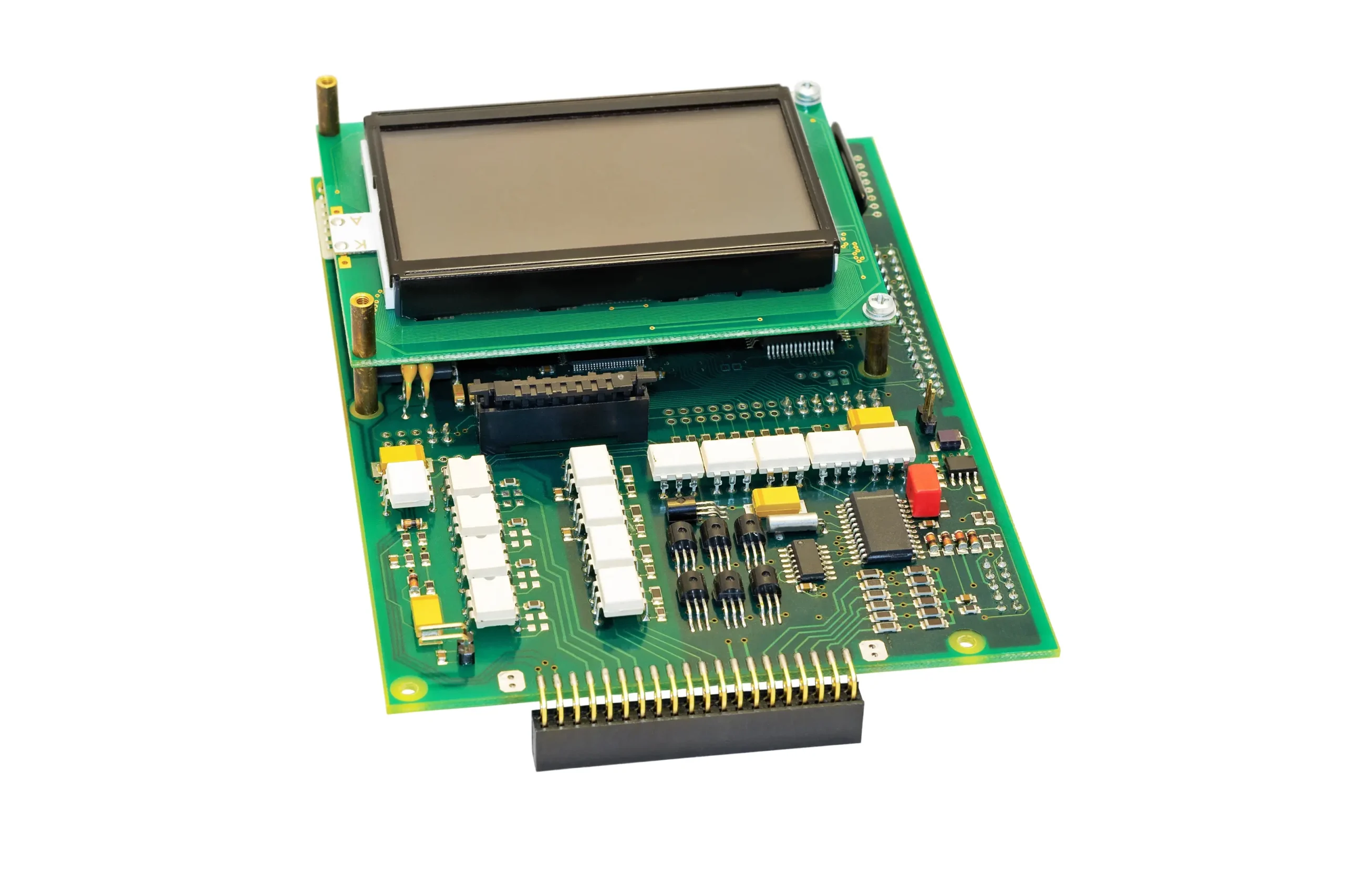
LED backlight derating curves play a critical role in long-term LCD reliability. Although brightness specifications may look acceptable at room temperature, elevated current and temperature significantly reduce LED lifespan.
Therefore, engineers must evaluate backlight current and thermal behavior early in the design process.
We work with OEM teams to support LCD module designs that balance brightness, power efficiency, and durability. Final system qualification and environmental validation remain the responsibility of the OEM.
What Are LED Backlight Derating Curves?
LED backlight derating curves show how maximum allowable current decreases as temperature rises.
As junction temperature increases:
-
Lumen output drops
-
Color shifts occur
-
Forward voltage changes
-
Lifetime decreases
Manufacturers publish derating curves to define safe operating limits.
However, these curves are often overlooked during early integration.
Why Temperature Matters
LED performance depends on junction temperature, not just ambient temperature.
For example:
-
A panel operating at 25°C may perform within nominal limits.
-
The same panel in a sealed enclosure may experience 60–70°C internally.
As a result, operating at full rated current can accelerate degradation.
This risk becomes even more pronounced in harsh environments, as discussed in Rugged LCD Design for Harsh and Safety-Critical Applications.
Backlight lifetime typically follows an L70 metric, meaning brightness drops to 70% of original output after a specified number of hours.
Higher temperatures reduce that lifetime significantly.
Thermal considerations are further discussed in LCD Thermal Modeling in Enclosures for OEM Reliability.
Understanding the Derating Curve
A typical LED backlight derating curve plots:
-
X-axis: Ambient or junction temperature
-
Y-axis: Maximum allowable forward current
The curve slopes downward as temperature increases.
Therefore, safe operating current must decrease at higher temperatures.
Running LEDs above the recommended derated current may:
-
Increase heat
-
Accelerate phosphor degradation
-
Cause uneven brightness over time
Engineers should always reference manufacturer derating data.
In regulated environments, engineers may also reference international reliability and safety frameworks such as those published by the
International Electrotechnical Commission IEC.
Current Versus Brightness Tradeoffs
Initially, increasing current improves brightness.
However, the relationship is not linear long term.
Higher current:
-
Raises junction temperature
-
Increases power consumption
-
Reduces lifetime
In addition, increased drive current can influence electrical noise margins, which are further examined in EMI EMC in LCD modules.
Driver selection and current regulation stability are also critical and are often addressed in semiconductor manufacturer documentation such as STM32 application resources published by STMicroelectronics.
Therefore, derating current slightly below maximum rating often improves reliability without noticeable brightness loss.
This tradeoff becomes critical in rugged systems where maintenance intervals are long.
Thermal Coupling in LCD Modules
Backlight thermal behavior depends on:
-
LED placement
-
Heat spreading layers
-
Mechanical frame design
-
Enclosure airflow
If heat cannot dissipate efficiently, local hot spots develop.
Consequently, localized overheating may shorten LED lifespan unevenly.
Thermal modeling at the enclosure level helps define realistic operating conditions.
Thermal behavior can also influence high-speed interface stability, particularly in designs using serial display interfaces such as those discussed in MIPI DSI Signal Integrity Basics for Reliable LCD Integration.
Lifecycle Implications
Backlight degradation is gradual.
However, in medical or industrial systems, brightness reduction may affect usability before complete failure occurs.
OEMs with 7–10+ year product lifecycles must plan accordingly.
Lifecycle planning considerations are examined in LCD Lifecycle Risk Management for OEM Programs.
Selecting a conservative operating point extends usable life.
Program-level tradeoffs between brightness, cost, and longevity are also discussed in custom vs standard LCD modules for OEM programs.
Common Engineering Mistakes
Common errors include:
-
Driving LEDs at maximum rated current continuously
-
Ignoring enclosure heat rise
-
Assuming ambient temperature equals junction temperature
-
Skipping long-duration burn-in testing
-
Failing to validate worst-case brightness drift
Although initial prototypes may appear stable, accelerated aging can reveal weaknesses.
Therefore, conservative design margins are recommended.
Practical Design Checklist
To apply LED backlight derating curves effectively:
-
First, obtain manufacturer derating data.
-
Next, model enclosure thermal rise.
-
Then, define worst-case operating temperature.
-
Additionally, select a reduced operating current margin.
-
Finally, validate brightness stability over time.
This structured process reduces long-term reliability risk.
Frequently Asked Questions:
What is LED derating?
LED derating reduces operating current as temperature increases to maintain lifespan and reliability.
Does reducing current significantly reduce brightness?
Not necessarily. In many cases, small current reductions produce minimal visible brightness change.
Why does temperature shorten LED lifespan?
Higher temperature accelerates material degradation and reduces lumen maintenance.
Who is responsible for validating lifetime?
Display module design supports reliability, but full system validation remains the OEM’s responsibility.
Contact Focus LCDs
If you are developing equipment requiring long operational life, we can assist with display module selection and backlight optimization strategy.
Focus LCDs manufactures standard and custom LCD modules designed for industrial, medical, defense, transportation, agricultural, and food service applications.
To discuss your application:
Conclusion
LED backlight derating curves define safe operating limits that directly influence LCD reliability.
By evaluating temperature, current, and enclosure conditions early, engineers extend usable lifespan and reduce field failures.
Conservative current selection today prevents premature brightness degradation tomorrow.

