

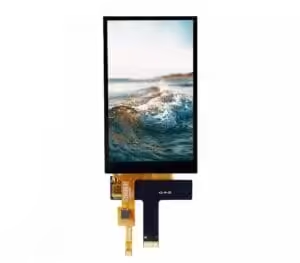
Prototypes set the foundation for a reliable final product. When engineers begin early builds, selecting and testing a TFT LCD module offers clarity on how the display will behave inside the actual device. The focus isn’t on prototyping the display itself, since TFT LCDs are largely standardized, but on confirming how the module performs within the full application, mechanically, electrically, and visually.
A TFT LCD may look right on paper, yet real-world performance depends on how it interacts with surrounding components, environmental conditions, and user input. Early testing gives teams the chance to evaluate brightness, readability, power behavior, and touch response in the same environment the display will eventually operate in.
Focus LCDs supports that process with U.S.-based engineering guidance, in-stock samples, and clear communication throughout each stage. Teams move forward with confidence because they understand how the display will function before production begins.
Why Prototyping with a TFT Module Matters
Prototyping with a display installed in your early hardware build often reveals details that aren’t obvious during design alone. Every application introduces its own challenges, from enclosure depth and connector clearance to lighting conditions and heat exposure. Testing a TFT module early helps identify those interactions before they affect production timelines.
Teams use prototypes to:
- Evaluate visibility in bright sunlight, low-light environments, or changing conditions
- Test touch panel responsiveness when installed behind protective covers or bezels
- Confirm electrical compatibility with the device’s power, interface, and signal requirements
- Validate mechanical fit, mounting points, and connector alignment
- Compare brightness, contrast, and color characteristics against user-experience goals
Finding issues now prevents costly changes later. Production schedules remain stable, tooling stays accurate, and redesigns become far less likely.
How Focus LCDs Supports the Prototyping Stage
Integrating a TFT LCD module into a prototype becomes simpler with a clear process. Focus LCDs provides guidance from the first conversation through final approval, giving teams confidence in each decision.
- Define Technical Requirements
Projects can begin with CAD drawings, a concept sketch, or a general set of needs. Focus LCDs reviews the requirements, discusses available TFT module options, and recommends the best match based on size, interface, viewing performance, and environmental needs.
- Select the Right Module
Most TFT LCD modules come with established specifications. Flexibility still exists in areas like backlight performance, capacitive or resistive touch options, and FPC tail configuration. Engineers at Focus LCDs help narrow the choices to a display that aligns with the application.
- Prototype Integration
Customers install the selected module into their early hardware build. From there, testing begins: brightness, touch behavior, color consistency, and mechanical fit all become easier to evaluate once the display is operating in the real environment.
- Review Findings and Adjust as Needed
Feedback from the prototype often highlights minor adjustments. These might include selecting a sunlight-readable variant, modifying a backing plate, choosing a different interface, or adjusting backlight requirements. Teams work directly with Focus LCDs to refine the choice before moving to production.
- Move Into Production
Once the module performs the way the design requires, Focus LCDs transitions to production using the approved display. Customers benefit from parts that remain available long-term, avoiding last-minute sourcing changes or surprise discontinuations.
Ongoing communication keeps each step transparent, so teams always know where their project stands.
Advantages of Working with Focus LCDs
Customers across industries value Focus LCDs for responsive engineering support and consistent results. The team offers guidance grounded in real application experience, making the selection and integration process smoother from the start.
Working with Focus LCDs provides:
- Faster Development Cycles: In-stock TFT modules and quick feedback accelerate prototyping.
- Reduced Redesign Risk: Early testing eliminates issues before production tools are built.
- Application-Driven Support: Engineers recommend modules suited for the lighting, temperature, and interface needs of each application.
- Long-Term Display Availability: Focus LCDs maintains production for the approved module, removing concerns about discontinued parts or supply interruptions.
- ISO 9001:2015 Certification: Quality remains consistent from sample through final delivery.
Support often includes helping teams compare TFT options such as MIPI DSI, sunlight-readable models, and transflective variants. Choosing the right display type early usually shortens the overall development process.
From Early Builds to Full Production
Once a display proves itself in the prototype, moving into production feels straightforward. Engineers remain involved as the project transitions to full manufacturing, providing continuity between the evaluation phase and the final product. Teams avoid disruptions, unexpected substitutions, or mismatched performance.
Focus LCDs takes pride in making complex projects easier to navigate. Accurate information, direct communication, and a commitment to practical solutions guide every interaction.
Building a new device requires confidence in how each component will perform. Prototyping with a TFT LCD module gives that certainty and establishes a clear path from concept to finished product.
Ready to begin your next build? Contact Focus LCDs to discuss your project and start prototyping your TFT LCD module today.

